
Blood is the Cry
Service, Sacrifice, and the Battle of Boca Teacapan

Throughout the US Naval Academy are old memorial tables - in Bancroft Hall, the stairwell of Mahan Auditorium, Dahlgren Hall, and especially the Chapel. Several are in the transepts below the Chapel dome including one in memory of Ensign Jonathan Wainright.
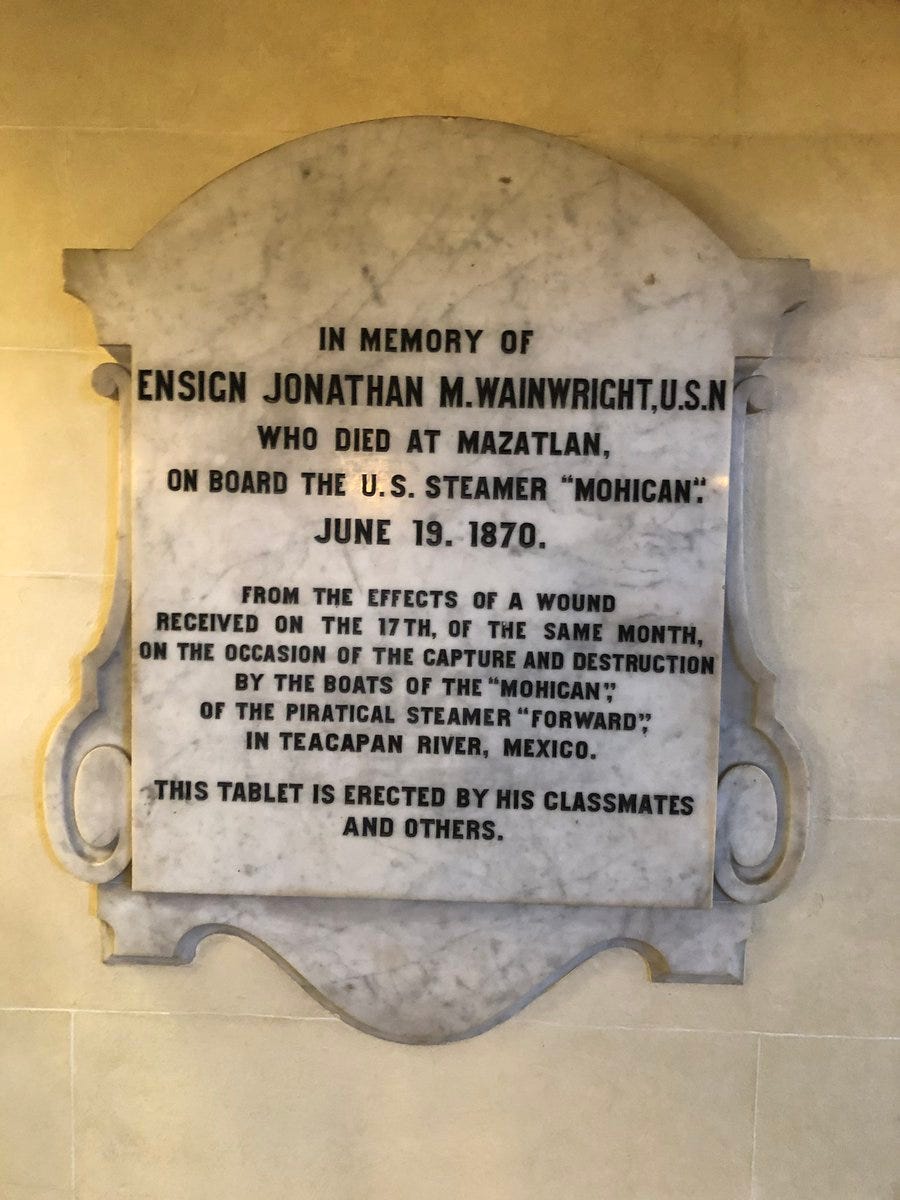
The table is also a reminder of the service and sacrifice of generations of Wainwrights through World War II:
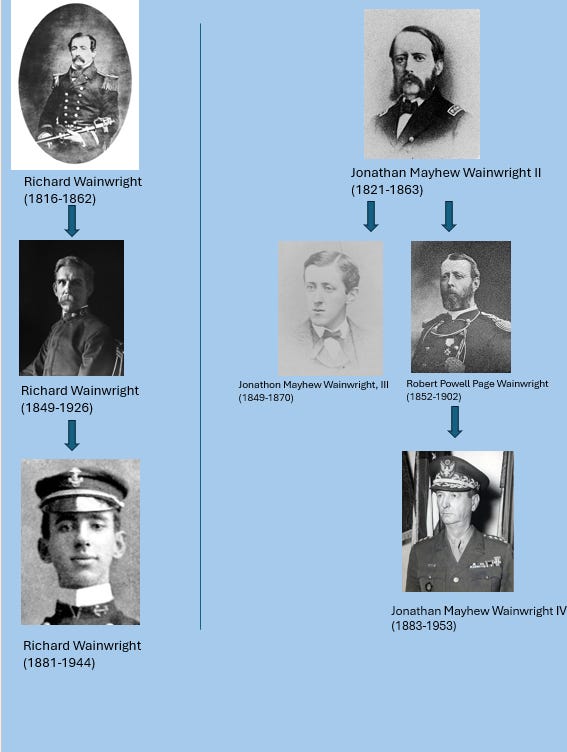
Richard Wainright (1816-1862) served in the US Navy commanding David Farragut’s flagship, USS Hartford, dying of illness before that ship’s service during the Battle of Mobile Bay.
His son, Richard Wainwright (1849-1926) graduated from the US Naval Academy in 1868, served as the head of the Office of Naval Intelligence, was the Executive Officer on USS Maine when it exploded in Havana Harbor, and was Superintendent of the Naval Academy from 1900-1902.
His son, Richard Wainwright Jr. (1881-1944) graduated from the Academy in 1902 when his father was Superintendent. He served on the battleship USS Florida and led a landing party at Veracruz, Mexico in April 1914. For his actions, he was awarded the Medal of Honor: “For distinguished conduct in battle, engagements of Vera Cruz, 21 and 22 April 1914. Lt. Wainwright was eminent and conspicuous in command of his battalion; was in the fighting of both days, and exhibited courage and skill in leading his men through action. In seizing the customhouse, he encountered for many hours the heaviest and most pernicious concealed fire of the entire day, but his courage and coolness under trying conditions were marked.”
The first Richard Wainwright was a first cousin to Jonathan Mayhew Wainwright II (1821-1863) was a naval officer who during the Civil War commanding the Harriet Lane on which he was killed during the Battle of Galveston.
His first son, Jonathan Mayhew Wainwright III (1849-1870) will receive more attention below.
His second son, Robert Powell Page Wainwright (1852-1902), graduated from the US Military Academy at West Point in 1875. He served in the West before landing in Cuba during the Spanish-American War noted and promoted for conspicuous gallantry. He died while in service in the Philippines. According to one report, when his father died aboard Harriet Lane, his ten year old son was aboard firing revolvers from each hand when he was found by Confederates. Based on the year, if this is true, that son was Robert making him possibly the youngest combatant of the Civil War.
Robert’s son, Jonathan Mayhew Wainwright IV, graduated from West Point in 1906. He served in the Philippines during the Moro Rebellion and later during World War I in the Meuse-Argonne Offensive. As a general, he defended resisted the Japanese invasion of the Philippines until forced to surrender in May 1942.
Each family member’s service is worthy of an essay and the family in their entirety well worthy of a full book (note to self after I finish my next book…)
Today’s story, however, focuses on Jonathan Mayhew Wainwright III and his brief action and sacrifice at the little known Battle of Boca Teacapan, what in 1926 the Los Angeles Times called “a forgotten sea fight,” a story “with its fadeless romance of pistol and cutlass and open boats, of bluejackets and stout hearts.”
The story begins with a 230-ton merchant ship out of San Francisco, the Forward, a former British Albacore-class wooden screw gunboat built for the Crimean War.
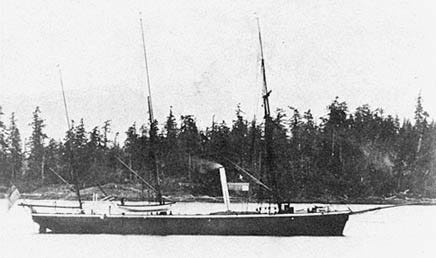
She had a length of 106 feet and a draft of six and a half feet - the latter fact important for this incident.
The ship’s captain was George W. Holder (alternately reported as Holden or Holding in various newspapers after the incident.) According to California voter registration lists, George William Holding was 37 years old in 1868 and naturalized as a US citizen on November 7, 1867. His occupation: mariner. He was born in England, left Liverpool on November 15, 1854 aboard the Emerald Isle and arrived in New York (source: passenger and crew lists.)
Also aboard Forward were second officer James Lee, engineer EW Johnson, and seamen H. Martin, Henry Kock, and James Hughbeck. The ship got underway from San Francisco bound for Mexican waters and the oyster and fish trade.
Here the story is murky. According to most accounts, the ship was seized off the Mexican coast by 150-200 armed individuals. It is likely at this point that the American crew was either forced or somehow persuaded to join the band.
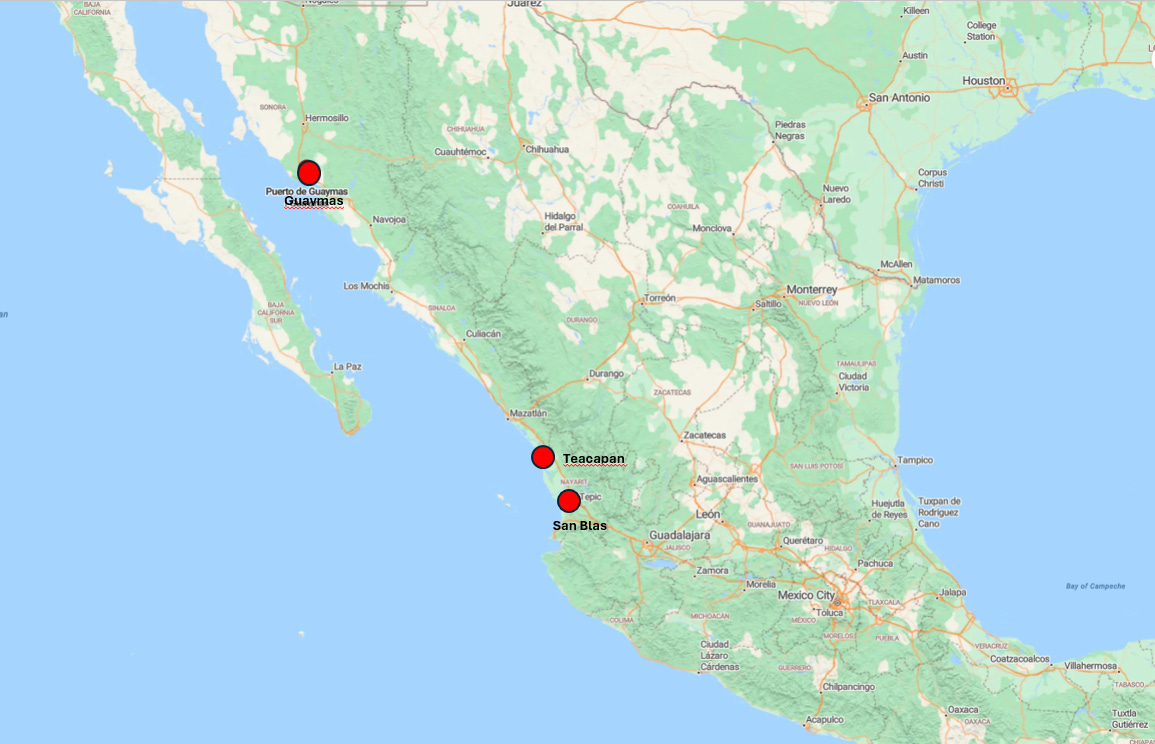
On May 27, the ship pulled into the port of Guaymas on the eastern short of the Gulf of California where the band invaded the custom house, secured from the US Consul coal for the ship, and took Mexican governmental officials hostage in the name of a nearby governor, Don Placido Vega, a descendant of Christopher Columbus. However, there is no confirmation that they were acting on Vega’s orders. Vega had apparently been a former Mexican secret agent for the United States and had strong ties to San Francisco. At this point an industrious reader may want to go down the rabbit hole with Vega’s papers.
Following the attack in Guaymas, local officials appealed to any local vessel. The closest was the USS Mohican, a 1,400 ton steam sloop of war with a crew complement of 160 commissioned in 1859. Mohican had been the lead ship of her class, the most famous of which was Kearsage for its battle against the CSS Alabama.
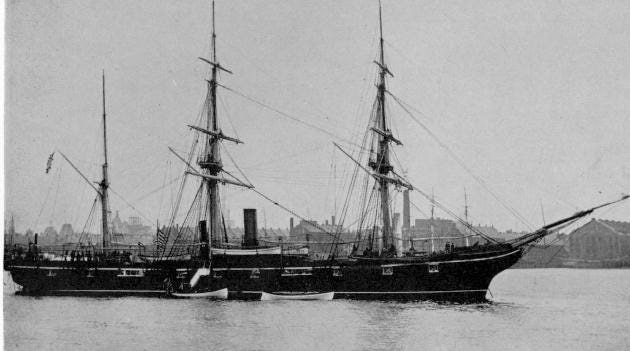
(USS Kearsage)
Mohican was under the command of Commander William Low (USNA Class of 1847). Local officials including Low and the local US Consul held a council of war and declared the Forward to be a pirate under the rules of international law. Mohican was dispatched to capture or destroy the vessel and its crew. Low mistakenly went north until he learned that Forward had been spotted off San Blas, well south of Guaymas.
On June 16, the Mohican arrived and learned that Forward had gone up the river. Unable to pursue, Low ordered his Executive Officer, Willard Brownson (USNA 1865), to lead six small boats up the river. (Brownson would later succeed Richard Wainwright as Superintendent in 1902.)
In command of the other five boats were Lieutenant Richard Malcom Cutts (USNA 1866), Ensign Harry Knox (USNA 1867), Ensign Harry Buckingham Mansfield (USNA 1867), Ensign Richard Rush (USNA 1867), and Ensign Jonathan Wainwright (USNA 1867). After some forty to fifty miles up river from San Blas and Teacapan, the Forward was found to be anchored, or possibly resting on the bottom since it was low tide. A small boat was seen escaping from Forward as it was being unloaded at about 7:30pm.
Brownson ordered Wainwright and his boat to pursue the escapees while the remainder of the task force began to board Forward. Suddenly gunfire erupted from the shore as Brownson saw Wright and the coxswain, James Donnell, fall while six others in the boat were wounded in the ambush by most of the Mexican force, although the Forward’s crew were still aboard.
Unable to get the ship underway in the low tide, Brownson ordered the Forward to be destroyed by fire as the small boats continued a one-hour firefight and made their way back to Mohican. Donnell was buried at sea.
Wainwright had lost blood but was awake and alert on the 18th. As ship’s surgeon Fred E. Potter wrote in his official report:
“Hopes were entertained that with care he might recover, but he had had eaten little or nothing for thirty hours, his strength had been kept up by the free use of stimulants; at 12 o’clock he began to vomit, and from that hour we recognized the ‘beginning of the end.’ He began to sink, and died at 11:40 on the morning of the 19th June, 1870. He knew his time had come, as he was told there was no hope of his recovery; he was resigned to his fate, uttered no complaint, expressed no wish, made no request, but like a true man and officer, met death with the calm smile of resignation on his lips, and as never in life had he wished evil to any one, in death he had nothing to regret.”
He concluded his report, “In him the Government has lost a true man, and the service an officer who has added one leaf more to the wreath of its victories.”
The San Francisco Chronicle’s report in Mazatlan began his article that echoed the sentiment of many other newspapers across the country:
“Blood is the cry from Mexico at all times. Among themselves the natives do a fearful amount of bloodletting, but they likewise have a taste for a little American blood every now and then.”
The prisoners were delivered to Mazatlan and, according to Low, “treated shamefully.” They all pled innocent and were sent to Guaymas for trial. According to one newspaper report, they were shot, but it’s possible that Holding at least escaped and returned at some point to San Francisco since he is listed in the 1880 city directory with an occupation of Master Mariner. Documents the following year state that he was captain of a schooner. The San Francisco Chronicle lists his death in 1888.
Wainwright’s body was brought to New York where his funeral was held on July 25 at Trinity Chapel. Attending his funeral were Commander David B. Harmony from the New York Navy Yard and William Whiting, commander of USS Saratoga, as well as Wainwright’s mother and younger brother, the only surviving immediate family members.
I think you mean Mobile Bay, not Manila, for the eldest Richard Wainright.
Neat stories, though, spanning over a century.